

Say “No” to the Six Stories – of Domination, Revolution, Isolation, Purification, Victimization and Accumulation. “Yes” to the Seventh Story of openheartedness.
Read Cory and the Seventh Story: A Children’s Book for Adults – Penguin Random House
Sustainable Agriculture
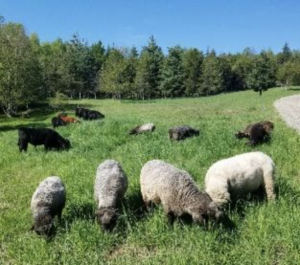
Figure 1 Cattle and Sheep graze on Ramstead Ranch’s natural pasture, a regenerative operation near Ione, WA
The Six-Story Reality – Conventional agriculture relies on massive applications of pesticides, fertilizers, and fossil fuels. It tends to be very large-scale, use large quantities of water, and depend on a handful of highly competitive crops. It results in significant levels of soil erosion, as well as the contamination of groundwater and ecosystems.
Analysis – Sustainable Agriculture eliminates the use of pesticides and hormones and largely maintains soil fertility by application of on-farm residues and rotation of nitrogen-fixing crops. Any external fertilizers must themselves be sustainably produced. It minimizes soil erosion through crop choices, cover-cropping, and low-till methods. It emphasizes crop diversity – both of species and varieties – which provides inherent resilience in the face of pests, disease, and weather extremes.
Sustainable Agriculture is extremely Resource Efficient and avoids any water withdrawals which impair habitat. It provides buffers of native vegetation along streams to maintain favorable water temperatures and water quality. Sustainable Agriculture also requires that plant and animal waste be carefully contained and treated to avoid any contaminated run-off.
Sustainable Agriculture is a compatible land-use in Buffer Zones. Farms and ranches in these areas should be managed with special attention to maintaining habitat connectivity and quality. For instance, in some areas, ranchers are accepting full compensation for livestock losses rather than opposing wolf reintroduction efforts.
Sustainable Agriculture can be profitable on an extremely small scale, and backyard gardens and small urban farms contribute greatly to the self-sufficiency and character of Human Scale Neighborhoods. While Sustainable Agriculture can be practiced at the scale of thousands of acres, on the whole it tends rebuild Local Assets. Its reliance on local labor rather than expensive imports (seeds, pesticides, fertilizer, fuel) greatly contributes to Local Economies and Productive Rural Areas. Sustainable Agriculture emphasizes the health and safety of farm workers, providing a living wage and contributing to Social Equity. Farmer’s markets, Community-Supported Agriculture (CSA) arrangements, and relationships with restaurants and stores help to establish Rural-Urban linkages.
Most, but not all, aspects of Sustainable Agriculture are addressed by organic certification standards like those administered state-wide by California Tilth and Oregon Tilth and nationally by the U.S.D.A. This form of Product Labeling is well accepted in the marketplace and can attract a price premium of 50% or more. The organic food market is the fastest growing sector of the food industry, with a growth rate of 20% per year over the last two decades. Processors, handlers, marketers, and restaurants can also receive organic certification, creating a wide range of opportunities for Value-Added Production in Sustainable Agriculture.
The Seventh Story Choice – Farms and gardens should maintain their own soil fertility, avoid pesticide use, and prevent erosion. They should be planted in a wide variety of crops and maintain their genetic diversity over time. They should use water efficiently, maintain the health of nearby riparian zones, and provide as much wildlife habitat as possible.
Say “No” to the Six Stories – of Domination, Revolution, Isolation, Purification, Victimization and Accumulation. “Yes” to the Seventh Story of openheartedness.
Read Cory and the Seventh Story: A Children’s Book for Adults – Penguin Random House
7TH STORY CASE STUDIES
EXAMPLES OF THIS PATTERN IN ACTION
- Ramstead Ranch – Free Range Meats (check out their website here)
 [Eileen] Napier [of Ramstead Ranch outside Ione north of Spokane] remembers… “People want connection to the land, (to) know that their food is healthy and clean and comes from a real farm—not just a picture on a label.”
“When people unplug from the junk-food diet of processed foods and turn to real foods that have been grown in living soils imparted by nature with real nutrients,” Napier says, “[they] go, ‘Wow, this is really different!’” – edible communities
Podcast: New Story Spokane interviews Stan and Eileen. Listen here - Palouse Heritage – Heritage Grains (More details here)
 “Palouse Heritage Mercantile offers premium heritage grains grown in the Palouse region of Washington State. Heritage grains provide richer flavor, higher nutrition, and better digestion than modern grains. Our regenerative farming practices ensure every harvest nurtures the soil, protects biodiversity, is free from glyphosate, and remains 100% non-GMO. Shop our whole grains for your milling and baking needs to create authentic foods with deep history and superior taste.”
Podcast: New Story Spokane interviews Don Scheuerman. Listen here - Growing Neighbors – encouraging Spokane and INW city folk to garden in community…
 Our primary goal is healthy relationships (including with every member of the environment). Our primary means to that end is increasing access to healthy food. Our primary program is starting and designed, organic, and regenerative. Our long term vision is to see all local neighbors treating the whole community of creation more like family. We are cultivating an ecosystem where fresh expressions of healthy community can take root, grow, thrive, and multiply. Our practices will particularly increase food access, waste reduction, environmental care, and community development.
 - Anthem Oats, South Dakota
How Regenerative Farming Heals Soil, Water and Climate
 “After decades of industrial agriculture, farmers around the world are rediscovering something their great-grandparents knew instinctively: healthy farms work with nature, not against it.Today, our commitment to regenerative farming represents both a return to these time-tested principles and an embrace of modern scientific understanding. Rather than depleting natural resources, regenerative agriculture actively restores them.
The approach focuses on rebuilding soil health, enhancing biodiversity, and creating farming systems that can actually help reverse climate change while producing nutritious food.” [Read further here]
Article: How Regenerative Farming Heals Soil, Water, and Climate – Anthem Oats
The Seventh Story Choice – Farms and gardens should maintain their own soil fertility, avoid pesticide