

Say “No” to the Six Stories – of Domination, Revolution, Isolation, Purification, Victimization and Accumulation. “Yes” to the Seventh Story of openheartedness.
Read Cory and the Seventh Story: A Children’s Book for Adults – Penguin Random House
Access to Knowledge
 The Six-Story Reality – Conventional education, at all levels, largely ignores the broad context and specific skills that define an emerging reliable prosperity. Fragmented by discipline and disconnected with place, it leaves people ill prepared to direct the enormous transitions that are occurring.
Analysis – Reliable Prosperity depends on the Access to Knowledge of its citizens. This includes both access to basic literacy skills, math and science, history, geography, and so forth and a new kind of ecological literacy grounded in the core knowledge areas of the economics of reliable prosperity. Access to Knowledge must be universal, and available to all ages.
Ecological literacy requires a broad familiarity with the functioning of the biosphere and the distribution of cultures and ecosystems across its land and waters. It entails a more detailed knowledge of the local bioregion and its flora, fauna, rivers and mountains, forests and fields, soils, geology, climate, and history. It demands an even more intimate knowledge of the immediate region, its mingled cultural and natural history, its economic activities, patterns of settlement, its elders and its storytellers. It is sensitive to local and ways of knowing.
Ecological literacy extends from Ecosystem Services to Green Building, from True Cost Pricing to Sustainable Agriculture. It provides the conceptual tools to map and invest in social, natural, and economic capital. It includes the practical tools to participate in Civic Society, along with skills like placing erosion control structures on a riverbank or tending a salmon hatchbox. The schools, centers, and universities that teach ecological literacy are a critical resource, and educational activities should be designed to give back to the community.
While ecological literacy is best instilled in the very young, it continues to be refined through high school, university, and work experience, and is fundamentally intergenerational in character. It can be transmitted through environmental curricula within traditional educational institutions; broadcasted through a wide range of bioregional media; incorporated within green marketing campaigns; passed on by skilled mentors; and continually renewed through festivals, celebrations, and rituals.
Ecological literacy creates opportunities for new products and services by facilitating greater understanding of local ecosystems and broader living processes. It celebrates and nurtures knowledge of place as a critical resource for sound stewardship. It encourages a base of shared knowledge that is widely distributed among the inhabitants of a bioregion and emphasizes community access to data of local relevance. For these reasons, Access to Knowledge is a critical supporting element of Local Economies. It is the irreplaceable intellectual capital that pervades reliable prosperity from the smallest village to the largest city, providing both new economic opportunities and renewed ties to place and biosphere.
The Seventh Story Choice – At all educational levels, provide a fully integrated ecological literacy curriculum which grounds students in the science of living systems and the practical skills necessary to create reliable prosperity. Place particular emphasis on local and bioregional topics and carefully connect educational institutions with their surrounding communities. Ensure that access to knowledge is universal, and available to all ages.
Say “No” to the Six Stories – of Domination, Revolution, Isolation, Purification, Victimization and Accumulation. “Yes” to the Seventh Story of openheartedness.
Read Cory and the Seventh Story: A Children’s Book for Adults – Penguin Random House
7TH STORY CASE STUDIES
EXAMPLES OF THIS PATTERN IN ACTION
- Spokane Public Library
OUR MISSION & VISION
Mission: We connect you to knowledge and new possibilities
Vision: A community where everyone learns and belongs.Vision 2030 Priorities Sustainability & Stewardship – Just one of many priorities, the library will lead by example in sustainability and will champion a culture of shared responsibility for Spokane’s future. Through partnerships and education, we will nurture community resilience in Spokane for generations to come.
Program Examples:
Check out their Earth Day celebration in March 21 here
Check out Liberty Park branch’s Water-wise Sustainable Landscape here - Eastern Washington University – “grounding students in the science of living systems and the practical skills necessary to create an economy of Reliable Prosperity.”Program Examples:
Palouse Prairie Restoration Project – “Today almost nothing of the original Palouse Prairie remains. EWU researchers are working to change that.
“In the days before the land was plotted, plowed and paved, the patch of Palouse prairie that EWU calls home was part of a magnificent landscape with sun-kissed rolling hills carpeted by a kaleidoscopic of native flora.“Today, with just a sliver of that wild frontier remaining, Eastern Washington University has embarked on a project to transform this 120-acre parcel of university-owned land back to its native habitat.“As the Prairie Restoration Project unfolded, it gave birth to a “living laboratory” that serves as a hub for environmental research and interdisciplinary collaboration.
“EWU students and faculty have expanded those community partnerships – working with the Spokane Tribe of Indians and other Native peoples, whose ancestors for millennia called the prairie home. This collaboration incorporates our tribal partners’ vast knowledge while honoring their histories and connecting our communities.”
Listen here to an NPR report and examine a map of the project.
Sustainable Building and Energy – Catalyst Building, the Downtown Campus is part of a collaboration with AVISTA and McKinstry in developing an eco-hub that will change the way buildings are build and energy is used in the USA.
- Ramstead Ranch – Educational Tours and Classes
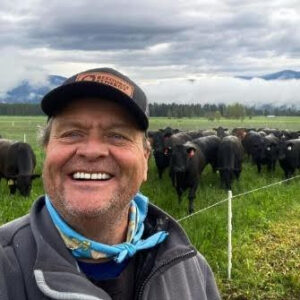 Stan and Jean Hayes and Eileen Napier, co-founders of Ramstead Ranch, model and teach ranching, “fully integrating an ecological literacy grounded in the science of living systems” and demonstrating the reliable skills necessary to prosper. The soils of the land they farm have only improved over time, even as they have made a living working with it.