

Say “No” to the Six Stories – of Domination, Revolution, Isolation, Purification, Victimization and Accumulation. “Yes” to the Seventh Story of openheartedness.
Read Cory and the Seventh Story: A Children’s Book for Adults – Penguin Random House
Waste as Resource
The Six-Story Reality – Industrial processes were initially designed to take resources, make products, and turn them to waste. Two centuries of take-make-waste have begun to degrade the health of ecosystems. Waste, by definition, is a foregone opportunity which is now placing a severe drag on the bioregional, national, and global economies.
 Analysis – In 1998, the United States produced 6.5 billion tons of waste. A significant percentage of this waste was produced in the coastal temperate rainforest bioregion. This waste includes components from raw materials extraction, materials processing and manufacturing, materials dissipated into the environment during product use, and post-consumer and municipal waste. This volume of waste is increasing annually, as is total resource consumption. With the simple addition of future population growth, the increased social, environmental and economic stress from resource use and waste will only become worse.
This growth in the volume of waste has important total cost implications for its disposal. The economic costs associated with disposal include the escalating prices charged for using the limited capacity of our landfills and the expense of cleaning up unproductive areas created by waste. There are also major Health impacts.
One of the underlying reasons waste generation is increasing is that neither industry, retail firms, governments, nor individual consumers have an incentive to use natural resources frugally. The resources are artificially cheap, and the gross national product and other measurements of economic health do not capture the environmental and social consequences of the initial and subsequent waste production and disposal costs.
The aim of True Cost Pricing is to shift the tax burden from labor and investment (which provides no incentive for conservation) towards consumption, particularly of natural resources, virgin materials, goods and services that pose significant environmental threats.
Not generating any external waste in the first place – through Resource Efficiency, Sustainable Materials Cycles, and designing Product as Service – remains the primary strategy. Water, energy, and materials can cascade through a series of uses before leaving a facility, gradually decreasing resource quality. The Zero Emissions Research Institute has pioneered zero-waste breweries which generate a whole range of valuable by-products, including worms, compost, animal feed, and mushrooms from process “wastes”. Such breweries produce several jobs from the waste streams for every job connected with the primary product.
Any external waste streams remaining after careful application of this strategy should all be designed to be a useful resource as locally as possible. For instance, the industrial eco-parks now being developed throughout the United States contain clusters of companies that are designed to synergistically use each other’s waste heat, water, chemicals, and materials, collectively producing zero waste. Waste exchanges are most beneficial and easiest to arrange when companies are in close proximity, but even then, contractual arrangements for the supply of waste streams can be a delicate issue given the intrinsic variability of production processes.
When waste streams have not been designed as a resource, it is often still possible to find willing customers. It may be necessary to make capital investments to alter the quality, composition, packaging, or timing of the waste stream. Waste exchanges, like the California Waste Exchange and dozens of others now springing up, allow industrial producers and consumers to find each other through listings of materials available and in demand. Such exchanges have kept thousands of tons of materials in use.
Waste as Resource can be applied in any rural or urban community as an important contribution to Local Economies and Sustainable Materials Cycles. In many instances, it creates new skilled jobs, contributing to Social Equity.
The Seventh Story Choice – Use waste as a resource inside a facility to cascade different uses of water, energy, and materials. When external waste streams are generated, co-locate them within a zero-waste eco-industrial park. If this is not possible, or waste streams already exist, seek customers for them through waste exchanges, and make capital improvements as needed to provide a commercially viable form of waste.
Say “No” to the Six Stories – of Domination, Revolution, Isolation, Purification, Victimization and Accumulation. “Yes” to the Seventh Story of openheartedness.
Read Cory and the Seventh Story: A Children’s Book for Adults – Penguin Random House
7TH STORY CASE STUDIES
EXAMPLES OF THIS PATTERN IN ACTION
- Spokane Zero Waste – One of their favorite quotes, …
“It’s no longer a question of what to do with waste, the question is how do we transform culture in a way that we no longer make it,” inspires. “We are a group of creative, passionate people who believe there are low-waste or waste free solutions for almost every aspect of daily life. We work to build a more resilient community through education, modeling and advocating for low waste policies.” Check out their website to learn about their Mend-It Cafés and ReCraft LABs. Check out their work to turn wasted wool – “90% of sheeps wool is burned or landfilled, but this material is a valuable resource that can help support agriculture, farmers, artisans and the environment” – into a local product through development of a Woolshed in the INW.
 - City of Spokane’s Waste-to-Energy Plant
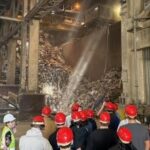
“Spokane’s Waste to Energy (WTE) Facility is part of our community’s overall comprehensive solid waste system – encouraging recycling and waste reduction in addition to energy recovery.“The facility burns municipal solid waste to recover energy in the form of electricity and handles 800 tons of municipal solid waste a day. The facility generates approximately 22 megawatts of electricity, enough to power 13,000 homes, and earns up to $5 million in power sales annually.“This process reduces the volume of solid waste by 90% – 70% by weight. The resulting ash is biologically inert and sent to a regional landfill to be used as alternative daily cover.”
– City of Spokane website
For all its benefits, the plant is not without its challenges, notably toxic emissions into the atmosphere.